Sunday, March 24, 2013

A Blue St. Patrick's Day


Historically, blue was the color associated with St. Patrick in Ireland.  The color is still represented today in many places such as in the coat of arms of Ireland, the team colors of the University College of Dublin and the plume or hackle of the tall bearskin hats of the Irish Guards regiment of the British Army, as well as many other places.  The “wearing of the green” began during the middle 1700’s as local converts to the Christian faith wore shamrocks or ribbons of green on their clothing to signify their faith.  Over the years, the shamrock and the wearing of green on St. Patrick’s Day evolved into a celebration of Irish ethnicity as well as a Catholic feast day.  Today, well over 34 million Americans can trace their heritage to Ireland and I am proudly one of them through the McAlister clan of my great-great grandmother, Ezamiah McAlister.

This past St. Patrick’s Day was definitely more blue than green for me.  I awoke to the sound of voices outside my tent at the Blue Mountain Shelter on the Appalachian Trail.  I could tell from the amount of light in my tent that the sun was already shining brightly in a blue sky and it was going to be a beautiful day.  Beautiful as far as the weather was concerned anyway.

I had stumbled into camp about 6:30 the evening before very exhausted from the 7.3 mile day that was supposed to be an easy hike.  For the most part, the majority of the day was relatively level terrain and the weather was pleasantly warm with only a few wispy clouds high in the sky.  Pleasantly warm unless you’re humping a 30 some pound pack over the mountains which is much more pleasant in cooler temperatures. 

All was well though and the biggest concerns of the day were trying not to get sunburnt along the way and keeping the gnats and flies away from my face.   There’s no doubt that after my second day of not showering and not wearing deodorant, I smelled worse than a cow in the pasture and I began to wish I had a tail to swat the pests away as I continued along the trail.  Still, the bugs were a minor inconvenience and it really was a beautiful day.

That morning, the 16th, I had awaken with my usual morning stiffness in my lower back from the arthritis I have there, but with a couple of tablets of vitamin I (ibuprofen) and some stretching and movement to get things lubricated, usually within an hour, I’m up and running normally.  So, I continue my packing and trying to loosen the ole bones, but when I get down on my knees to roll up my mattress and then my tent, I suddenly find myself gripped with shooting pain across my lower back that paralyzes me into a worshipful bow to an unknown god.  The cramp releases shortly and I shake it off thinking to myself, “Whew…I’m glad that passed.  Thank Goodness this will be an easy day”.  And an easy day it was, that is, until the last mile and a half to two miles as I began the climb up Blue Mountain.

Now, I don’t want anyone to get the wrong impression about Blue Mountain.  It isn’t especially steep getting up to Blue Mountain from the south side as compared to say, Wildcat or Sassafras Mountains, although there are some steep sections.  It is one of the top 20 peaks in Georgia and tops at 4,020’ with the shelter being not quite at the top of the mountain.  The climb from the lower points in the area or the known prominence of the mountain is around 700’.  No, what makes Blue Mountain so tiring to climb is the rocks. 
 
Rocks add a different dimension to hiking.  Aside from the jarring impact to the knee joint as each step pushes back on the body and gives no cushion to the weight landing on it, there is the labyrinth of pieces, large and small, that must be accurately negotiated.  I was actually a little surprised that it was taking more time and increased caution to cross this path considering that many times the rocks were almost lying flat like a makeshift walkway that someone forgot to level.  There were many areas that I found myself climbing upward over rock “steps” that varied greatly in height and alignment.  Dispersed among the rocks were trees and their gnarled roots that provided another twisted obstacle to gyrate my foot around or over rarely with enough room to plant my entire boot down on a solid surface. 

All the while that I was intently focused on each foot placement, my pack pushes ever so slightly on my back like a bully threatening to knock me off balance.

My mind would wander back to my youth and remember days long gone by in which I bounded over similar rocky paths with the surefootedness and speed of a mountain goat.  I smile when I recall my mother calling from behind me, “You better slow down or you’re going to fall” and the youthful confidence I had that allowed me to seemingly float over these obstacles.

Now, I find myself echoing my mother’s words to myself, “Slow down…watch where you step…be careful.”  There was absolutely no way to rush over this twisted rock pile of a path as I carefully planted each trekking pole and foot to ensure that I didn’t twist an ankle or trip over a protruding shard to come crashing down on the unforgiving surface.  

My easy day was not ending so easily and I was getting more and more tired.  Where was the shelter?  It couldn’t be too much further.  It felt like I had been climbing for a long time and at my last mile marker check on my map, it should have only been a little over a mile to the shelter.  Was I really moving that slowly that I hadn’t covered the distance yet?  You try to judge your speed and distance with the time that passes, but it varies greatly with the terrain you’re on.
 
With my water and strength running low, I finally came across the next water source, a piped spring on the left side of the trail.  I dropped my pack to refill my bottle and sat there exhausted.  After swallowing some refreshing coolness, I looked up the hill and find the evening sun glowing off the roof of the shelter above.  FINALLY, I’m done for the day…just another 100 yards and I’m done.

Smiling faces of new friends warmly welcome me to our home for the evening.  They see that I am spent and quickly volunteer to help set up my tent in the blustering wind and Junebug even makes a run back to the spring to fill my other water bottles.  Trail camaraderie is amazing.  I make myself a quick meal of noodles and vegetables and the warm liquid helps me feel better in the cold wind that has picked up speed in the evening hours.  We witness a beautiful sunset and I begin to settle in for the night.

As I approach my pack which is leaning against a nearby tree and bend over to pick it up, I’m suddenly doubled over with pain.  It felt as if someone had decided to use my lower back for batting practice.  I fight back the tears that want to come and hope that no one is watching. 

These are the moments that test your resolve to complete the trail.  You have made promises to family and friends to be careful and to do your best not to get hurt.  You know that you will endure varying levels of discomfort on this journey due to the physical, environmental and emotional challenges involved.  You must listen to your body and know the difference between a temporary discomfort and when it is time to throw in the towel and leave the trail.  You consider the time and effort you’ve invested into getting where you are and weigh the costs of continuing.

The back spasm passes.  I finish unpacking, hang my food bag, visit the privy and go straight to bed.  I know that I plan to get a shuttle in Unicoi Gap just about 2.5 miles away and mostly downhill the next day.  I’m taking a short day and heading for The Blueberry Patch hostel hoping that my rest there will alleviate my back pain and fighting back the mental fear that I might not be able to continue my hike if the pain and spasms continue.

So, after the usual tossing and turning of the night accompanied by gusting winds and the endless sweating inside the down sleeping bag and shivering with chills from anything hanging outside the bag that makes you wonder if you might have a fever, I awake to the cheerful voices outside my tent and catch someone mentioning that it is St. Patrick’s Day.  Quickly I do a mental inventory of my belongings to see if I have anything green to wear.  Ah, yes, my Mountain Hardware fleece beanie is olive green; not the most festive of greens to be sure, but green none the less.  Good, that’s covered. 

I sit there a few minutes longer trying to wake up to the point of being sociable and begin the typical morning processes of changing clothes and donning shoes to take care of nature’s call.  It occurs to me that for the first time in 10 days, I didn’t wake during the night to relieve myself which is great on one hand, but also probably meant that I was slightly dehydrated which is not so good.
 
Again, I pick up on some of the conversation outside my tent.  I hear someone mention Sir Packs-A-Lot and a vaguely familiar male voice responds.  Could it be?  Is Sir Packs-A-Lot outside?  I certainly don’t want to miss the opportunity to meet this A.T. celebrity.  I finish dressing quickly and crawl from my den and sure enough, there stands Bob Gabrielsen, Sir Packs-A-Lot himself!

Turtlestone cheerfully greets me and comments on my green beanie being appropriate for the day.  Everyone is hurriedly preparing to leave camp and we say our farewells and see-ya-laters, as I am taking my sweet time nursing the stiffness and knowing I don’t have far to go.  I get a few minutes to chat with Bob alone and snap a picture before he and Next Wind take off down the trail.  I call The Blueberry Patch to discuss arrangements for a night’s stay and I call for a shuttle driver to meet me in Unicoi Gap.  I am alone for a very few minutes at the shelter before Paranoid and another gentleman arrive.  We chat briefly and I finish packing and head out.

Blue Mountain is slightly deceiving.  From the shelter it looks like you are on top of the mountain, but it’s a false top.  Further down the trail the mountain again rises, so you have to climb more before you start the 1050’ descent down the other side.  Thankfully, the descent wasn’t quite as rocky as the ascent and by 12:30 I reached Unicoi Gap. 

There are several hikers hanging around the parking area including Sir Packs-A-Lot and Next Wind who I am very surprised to see there because they left so far ahead of me and are much faster hikers than I am.  As I approach, Bob proudly announces that they called for delivery pizza from the nearby town of Helen, Georgia.  I inform him that I will be waiting for a shuttle into Hiawassee to go to The Blueberry Patch hostel. 

Within a few minutes, the delivery driver arrives with two large supreme pizzas and two 2-liter bottles of soda.  He gets out explaining that this is the longest delivery he has ever made and that the only reason he agreed to do it was that years ago he had been a boy scout and had to hike a week on the Appalachian Trail.  He said he remembered what that was like and was pleased to bring the pizza.  Then he insisted on taking a picture of the hikers with the pizza and said he would be posting it to Facebook.

So after climbing down Blue Mountain, there I sat under a bright blue sky enjoying delivery pizza and soda with a trail celebrity all while waiting to get a ride to The Blueberry Patch while trying not to feel blue about my back spasms which once again bowed me to the ground while reaching for a slice from Bob, all on a day that I thought was to be all about the green. 


Ironically, when I arrived at The Blueberry Patch hostel, it was painted green.


P.S.  I have been off the trail since my hike down Blue Mountain and have had a bit of the blues since; however, I will soon be returning to my hike and will continue my northward journey.  I have medication in hand to help alleviate any further spasms and will continue to Katahdin to the best of my ability.  Onward and upward!!


Thursday, March 14, 2013

Sleeping with Raccoons

Spent the night in a cabin that had four raccoons; one for each of us women staying there. The raccoons watched over us while we ate and watched a little tv and then remained in the living area while we slept.

The cabin was $60 for the night so split four ways it was really cheap and well worth it to have a flush toilet and hot shower.

During the night one little furry visitor gorged himself on the chocolate bottom of Onefoot's Reeses peanut butter cup.  Guess he got full or doesn't care for peanut butter because the rest was left for her.

After enjoying a good night's sleep and a warm room it was a little shocking to the system to step outside to 40 mph winds and 24 degrees.  I figure with the windchill it was in the low teens.  We almost considered trying to stay another night as the temps are supposed to improve, but after an hour I decided to head on down the trail.  I wrapped my red bandana around my face to block some of the icy wind and donned my silk glove liners and my windbreaker and headed out.

Some of my hiking companions Crazy Legs (who was in the cabin with us last night), Turtlestone , Junebug & Jack on the Mountain who is a 2003 thru hiker and 72 years old, put in a 5 mile day and are camped on top of the mountain tonight.  We should have a beautiful  but cold sunset and then on we go.  Who knows what creatures will grace us with their presence tonight.


Sunday, March 10, 2013

It's as Easy as Falling Off a Log

After two days in Georgia I can say two things for sure about this state.  It sparkles and definitely believes in the mathematical statement that the shortest distance between two points is a straight line.  The mountain here is full of quartz and mica and the sun glistens beautifully off these rocks.  But the trail goes straight up the mountainside and straight down the other side.  Hey Georgia! Ever hear of a switchback?  Right now the wavy elevation lines in my guide book are taking on new meaning.  Oh and yesterday at lunch I found out just how easy it is to fall off a log...especially when you take a seat to rest and it rrolls.


Thursday, February 21, 2013

It's Hairy Out There!!

Have you ever given any thought to why we use the slang phrase “It’s hairy out there?”  Apparently the British are the ones who originated the terminology of events or experiences being “hairy”.  The meaning, of course, implies that some situation is frightening, difficult or hazardous and “out there” is any area outside the safety of our own home.  The mind rather naturally extends the origins of this definition to the probability that it came from fear of some hairy beast outside.

Beauty and the Beast, 1987-1990

Was there some large, hairy, terrifying beast loose in Europe somewhere in the past?  The legendary children’s story of Beauty and The Beast comes out of France and the stories of the werewolf originated in ancient Germany.  Could this be what the Englishmen were afraid was outside their door?  Or maybe it was something else.


Here on the North American continent, we also have legendary, hairy beasts that terrorize the imagination like the Chupacabra and Bigfoot.  While the official existence of these creatures continues to be debated, there are plenty of individuals who either claim to have seen these creatures or who believe that they exist.

There are also the animals of the fields and forest such as the bear, wolf, wild hog and mountain lion, all hairy beasts in their own rite that can strike fear in the heart of men when they are confronted outside the safety of our homes.  But I have come to believe that there may be another creature that can be added to the list of scary, hairies and that my friends, is the long distance hiker.

It is trail tradition for the male hiker to grow a beard during the length of his hike which at the end of four to six months on the Appalachian Trail gives this hiker the appearance of the rugged mountain man.  At least that is the plan.

For 37 episodes in 1977-78, The Life and Times of Grizzly Adams, based on the true story of James “Grizzly” Adams, aired on televisions and was quite a popular show. Dan Haggerty played Grizzly Adams and many women fawned over the hairy mountain man.  While Mr. Haggerty may wear the beard well and attract the admiration of many women, I’m not sure all our hiking men are so fortunate.  Many end up looking more like Harry from the 1987 film, Harry and the Hendersons.  Scary hairies!
Now, before the men revolt on me here, let me say that I’m a traditionalist at heart and believe that the guys should continue the hair growing habit and finish their hike furry-faced regardless of whether they turn out to be a Grizzly Adams or a Harry.  Beards are making a comeback in fashion right now and who knows, maybe the look will prove to be a good one for you or at the very least it will be good practice for playing the grandfatherly Santa Claus.

For many, this will be the one and only time that they will sport such a look and we all know that shaving on the trail can be quite a hassle.  Who wants to carry a razor and shaving cream around?  That’s extra pack weight and we can’t have that.  And let’s not forget that a beard can provide decent insulation against cold and wind.  So there are some practical purposes hidden behind the hair.

Oh, but what about the ladies on the trail?  You didn’t think I was going to pick on just the men, did you?  Although there are men who preen and fuss over their hair and body builders and athletes who shave themselves smooth, generally speaking, when you think of people who spend lots of time on their hair, you think of women.  I mean, come on, we have to shave, shape and style everything from the hair on top of our heads, to our eyebrows, armpits and everything from our waist down to our toes.  Hair, for women, is a full-bodied issue.

So, let’s start at the top.  The number of ways in which a woman can style her hair are phenomenal, but basically, as a hiker, women will end up in one of three categories—the ponytail or braid, the short cut or the shaven. 
The ponytail, which we know was developed by early cavemen as a handle to carry their chosen mate home, is simple to maintain, can keep the neck cooler and allows a woman to keep her long hair in a manageable fashion. The same can be said for braids which can be worn as a single or as multiple strands.  Hopefully, if braids are chosen, the hiker won’t end up looking like Pipi Longstocking in the morning which could easily be classified as another scary hairy.

The short cut, on the other hand, is another relatively easy hairstyle for maintenance purposes and I kind of like the word association of taking a shortcut on the trail.  Could this be the blue blazer’s preferred style? (Blue blazers are hikers who follow the “blue-blazed” side trails vs. the “white-blazed” official Appalachian Trail.)

Finally, we have the shaven category.  For a woman to shave her head is considered a very brave act by many women.  I have to agree that making the decision to shave your head takes a certain amount of courage.  Of course, this G.I. Jane approach makes for very low maintenance on the trail. I don’t know if men experience the same kind of anxiety that a woman feels when confronted with the buzzing blades of a razor, but I do know that I am not willing to go quite that far.

I spent some amount of time going back and forth between the ponytail and the short cut styles for my hike.  Unlike my two daughters with their thick hair that they can grow down to their waistline, my hair has a very fine texture and has never been longer than a few inches past my shoulders.  For some genetic reason, it just will not grow any longer without disintegrating into a tangled mess of split ends.   

While I generally try to maintain some length to my hair, mostly to please my husband, I typically prefer to go with a shorter cut and finally decided to keep it simple and cut it instead of pulling it back into a ponytail.  I’m not sure if my decision has anything to do with the many hours my mother spent combing the “rats’ nests” out of my hair when I was younger or the reported stories of mice climbing through a hiker’s hair at night in the shelters, but at any rate, I figured I wouldn’t be hunting for hair ties in my gear or waiting for long periods of time for my hair to dry.  

Remember, there are no electrical outlets to plug in the hair dryer and we certainly won’t be carrying all the mouse, gels, sprays, curling iron or brushes that a lady may use on a typical day.  So, with just a little of two weeks until I head out for the trail I took the plunge and got it cut.

All of this hairstyle talk may end up being a very moot point though since most of the time I will be wearing one hat or another on my head.  I am literally taking two hats, one to keep my head warm and the wind out of my ears and the other to shade my eyes from the sun and just because I like to wear a hat. 

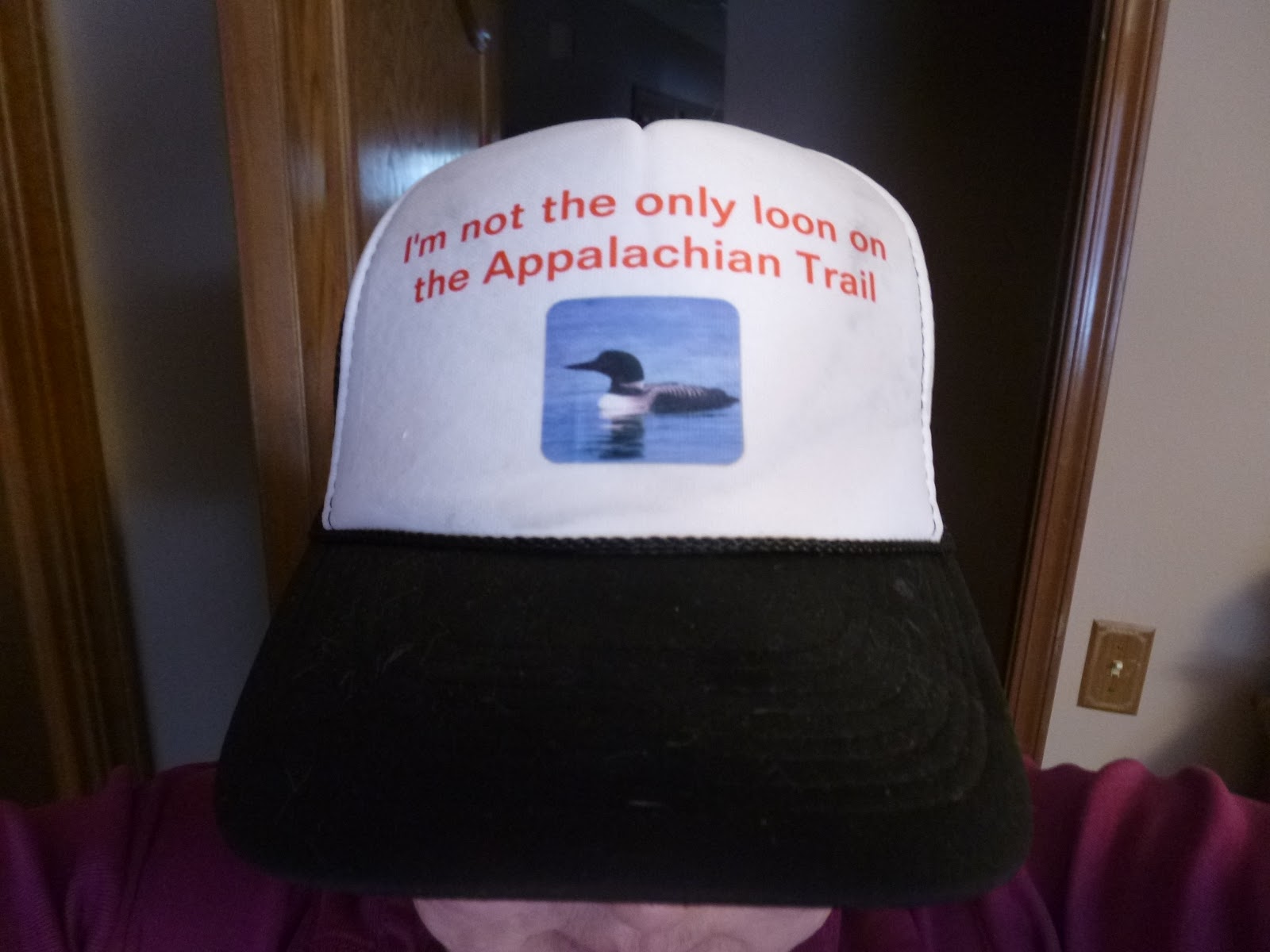
As a matter of fact, I had a special hat made just for this hike.  The cold weather beanie does a great job but I’m hoping to not have to wear it very often.  No, the hat I prefer to have on is my trucker ball cap. Typically, I don’t wear this type of ball cap, but the mesh on the back side of the cap will help to keep me a little cooler and besides, it reminds me of my grandfather who wore this style of hat for years.  Either way, these hats will definitely help cover up the “bad hair days."

Victor Melling in the movie, Miss Congeniality, while prepping his beauty pageant contestant (ah-hem, that would be scholarship contestant) makes   the remark, “Eyebrows, there should be two” and I’m willing to wager money that the set of tweezers carried by most every hiker for the supposed purpose of the removal of ticks and splinters will be used by the women on the trail, along with their emergency signal mirror, to maintain the shape of their eyebrows.  For those of us in the slightly mature crowd, I’m sure we can find some other plucking uses for those tweezers as well.  I, for one, have no intention of trying to compete with the men in the facial hair department and plan try to keep my menopausal moustache and grandma goatee under some form of control while out there.  No, I have no desire to become the bearded lady and begin a career in the carnival after my hike.

As for the rest of the body hair, namely the pits and legs, most women hikers “go European.”  I don’t honestly know that the American assumption that European women don’t shave their pits or legs is true, but it certainly is what most Americans believe and have been told.  This shouldn’t be surprising as again, shaving in the forest can be a bit of a hassle. I’m sure most women hikers will be looking for those opportunities to catch a shower at a hostel or hotel when they can tame the wild, hairy beast they have become and once again, if only for a short while, feel like a lady.

So, as a non-hiker, if you happen to come across a large, hunch-backed, smelly, hairy creature coming out of the woods in the early evening hours please don’t freak out and report to the police that you’ve spotted a Big Foot.  In all likelihood, it’s just a long distance Appalachian Trail hiker coming into town for an evening meal, a shower and a shave, because it really is hairy out there.


Gotta love this one!!


Tuesday, February 12, 2013

Lady of Luxury


“Son, calling me ‘Sir’ is like putting an elevator in an outhouse; it just doesn’t fit.”

                                                                                    -- Emmet, Roadhouse, 1989

 Anyone who knows me can tell you that I have never been mistaken for a supermodel and I’m not exactly what we call a “girlie-girl”.  I didn’t enjoy playing with dolls as a child, never could get used to carrying a purse and make-up rarely graces this face.  No, I was the girl you’d find out on the ball field with the boys, wandering through the weeds examining bugs and wildflowers or digging in the dirt for fishing worms.  Most summers my legs looked like I’d been in a fight with my razor from all the cuts I’d have from running through the briars and the rash of sores from itching at poison ivy.  Yep, I was tomboy through and through or as my friend, Sonya says, a real Dirt Barbie.

Now, I’ve always admired those women who seem to have flawless beauty, graceful moves, the lovely clothing and fancy shoes, but I just don’t fit into that category.  Most attempts at trying to wear make-up or dressy clothes just leave me feeling uncomfortable and irritable.  It feels like trying to wear someone else’s skin.  My husband once saw me attempt to put on a pair of high heels in a shoe store and promptly remarked, “Get out of those before you hurt yourself!”  See, I wear a size 11 or 12 woman’s shoe depending on how they’re made and at 5’8”, I run to the taller side of most women’s sizes.  Add to that, the extra pounds I carry around and it doesn’t take much of an imagination to see why I’m out of the running for Miss U.S. A.  So, give me a pair of denim jeans, a cotton T-shirt, sneakers or flip-flops and I’m good to go.  
 
 
However, these clothing choices, while acceptable for a short day hike, are not going to work on a long distance, multi-month hike.  While years ago, everyone went hiking in denim jeans and cotton shirts, now we know that these are not good fabrics to protect you from hyperthermia situations which can occur anytime of the year.  A hiker on the Appalachian Trail is especially prone to this danger after walking along rain-soaked trails in those notorious thunderstorms that are so common in the spring and summer months.  So, I had to invest in a new wardrobe for this trip and clothes shopping is not one of my favorite activities, but I was in for a bit of a surprise.

For those of you who have been involved in sports or physical training of any kind over the last 5-10 years, I’m sure you are quite familiar with the current active-wear line of clothing, but for someone like me, who hasn’t had a gym membership or participated in any organized sports, aside from bowling, for decades now, these apparel choices are all new to me.  Terms like “wicking fabric” and mid or base layers are new to my vocabulary.  Companies like Under Armour, The North Face, Patagonia and Columbia have joined the ranks of the old school names of Nike, Adidas and New Balance.  Maybe they have even been around longer than I realize, but these brands are not normally included in my clothing purchases.  And of course, there is that taboo fabric of spandex that should never be stretched over some figures; mine included.

Well, after educating myself and receiving a lot of advice from experienced hikers, I have overcome my ignorance and am thrilled with my new hiker wardrobe.  It turns out that while there may be new terms for the material and there may even be some technological advances in the strength or durability of some of the fabrics, most all of this “new” athletic gear is nothing more than a combination of nylon, polyester and spandex blends.  Here’s a breakdown of my very fashionable hiker attire:

Pants:  I will be sporting Cabella’s Guidewear GXII convertible pants that are listed as 100% nylon performance fabric online and the tag reads 100% nylon shell with 100% polyester lining.  As convertible pants, the lower leg zips off to become a pair of shorts and they are equipped with a side leg zipper from the hem line to about mid-calf so that the pants can be converted without having to remove muddy boots. 

Shirts:  The shirt that I will wear is by Columbia and is listed as 100% polyester double piqued fabric with Omni-wicking technology.  Ok, yeah, sure….it’s a polyester shirt, very light and very comfortable and I love the color…teal for my first one, with a mint green one in reserve at home.  I am also carrying a spare shirt that is a Patagonia capilene 2 made of 100% polyester to wear if I need another insulating layer or in case my main shirt is wet, in the wash, etc.

Socks:  Two layers here.  The first is the Injinji Performance Toesock Liners which are supposed to help with moisture wicking and prevent blisters.  They are made of 75% Coolmax, which is an enhanced polyester fiber, 22% nylon and 3% Lycra, which is another word for spandex.  The second layer is the Smartwool PhD crew sock of 72% Merino wool, 26% nylon and 2% Elastane.  I will be carrying 2 pair of sock liners and 3 pair of Smartwool socks. 

The Unmentionables:  Ok, so I’m mentioning them anyway.  I’m doing something in this department that I never thought I would and am wearing men’s Adidas Climalite boxer-briefs with an 8” inseam.  These are surprisingly comfortable and are made of 91% polyester and 9% spandex.  The 8” inseam helps prevent thigh chafing and the material will wick away moisture.  There’s nothing like a good case of chafing to slow a hiker down.  These briefs are more like biking shorts than underwear and can be used for swimwear as well.  

As for the upper half, I will be wearing a good ole Fruit of the Loom full back, colored (either dark blue or a striped multi-blue & white) sports bra.  While this item is the only thing in the wardrobe with 95% cotton and 5% Lycra/spandex, it serves its purpose well, is comfortable and will double as a swimming top when needed.  Although, if and when I decide to dip into the water for a cool down and some relaxation, I don’t think it will be in a very public arena and I wouldn’t count on getting any pictures posted online either.  Some images just aren’t meant to be implanted into the brain.

Long underwear/thermal wear:  Columbia Omni-heat reflective thermal wear (pants and shirt) also made of 85% polyester and 15% Elastane/spandex.  My son says I look like I work at SeaWorld when I put these on, but this material is cool just to look at with its space-aged, shiny, silver lining that is supposed to reflect your body heat back to you.  Think of wearing an ultrathin car windshield shade covered in polyester.

My other cold weather clothing is all outer wear items such as a Patagonia down jacket, a Mountain Hardware fleece hat, a Marmot Trailrunner windbreaker jacket (100% polyester), a set of leather gloves and a pair of Thermasilk glove liners made of 100% silk…yes, you heard me right, silk.  I have never owned anything made of silk, which in my mind, is the ultimate in luxury fabrics.  On top of the glove liners, I also have a silk sleeping bag liner for inside my big, fluffy down sleeping bag which can add another few degrees protection in the cold and also will serve as my summer sleeping bag on its own. 

Down, there’s another item that is new to my wardrobe.  The only down item I have ever owned is my down pillow.  Now, while out in the wilderness, I’m going to have the pleasure of wrapping myself inside this wonderfully full, down cocoon every night for the first couple of months.  And around camp in the evening, I’ll have my Patagonia down jacket to insulate my body.  I don’t know about you, but I get a real sense of comfort when I wrap myself inside a nice, warm, soft blanket and these down items definitely fit the bill.


So, here I am, about to embark on probably the dirtiest, smelliest and most rugged trip I will ever take, one that I thought would appeal to my tomboy nature and instead of durable denim and my common cotton tee, I’m going to be wearing silk, polyester and nylon; all materials that are soft, slippery and the most sensual of fabrics.   I keep shaking my head in disbelief and trying to make sense of all of it.  I wonder…should I pack a little black dress and heels too?  Nah, that might be taking things a bit too far, but I sure do like this luxurious new wardrobe.